
Homemade Layered Flatbread
 i
i
Introduction
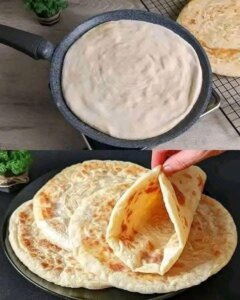
Layered flatbread is a delightful and versatile bread enjoyed across many cultures worldwide. It is known for its soft, flaky, and buttery layers, making it perfect for pairing with various dishes such as curries, stews, and dips. Unlike regular flatbreads, layered flatbreads have a unique texture achieved through careful folding, rolling, and cooking techniques.
Whether it’s Indian parathas, Malaysian roti canai, Middle Eastern malawach, or Chinese scallion pancakes, each culture has its own version of this beloved bread. Making homemade layered flatbread is a rewarding experience that brings warmth and authenticity to any meal.
History of Layered Flatbread
Layered flatbread has been part of culinary traditions for centuries, evolving in different regions:
- India (Paratha, Lachha Paratha) – These golden, crispy flatbreads are often stuffed with ingredients like potatoes, paneer, or lentils.
- Malaysia (Roti Canai) – A flaky and slightly chewy flatbread influenced by Indian immigrants, served with curry or condensed milk.
- Yemen (Malawach) – A rich, thick flatbread often eaten with honey or eggs.
- China (Cong You Bing – Scallion Pancakes) – A savory layered flatbread infused with green onions, offering a crispy and chewy texture.
Each variation highlights the adaptability of layered flatbread, making it a global favorite.
Benefits of Layered Flatbread
- Nutrient-Rich – When made with whole wheat or enriched flour, it provides essential carbohydrates, fiber, and protein.
- Energy-Boosting – The combination of flour and fat makes it an excellent source of sustained energy.
- Versatile – Can be served with savory or sweet toppings, making it suitable for any meal.
- Easy to Make – Requires minimal ingredients and can be cooked on a stovetop without an oven.
- Customizable – Can be made plain, stuffed, or flavored with herbs and spices.
Ingredients
For the Dough:
- 3 cups all-purpose flour (or whole wheat flour)
- 1 teaspoon salt
- 1 tablespoon sugar (optional)
- 2 tablespoons melted butter or oil
- 1 cup warm water (adjust as needed)
For Layering:
- 4 tablespoons softened butter or ghee
- 2 tablespoons oil (for brushing)
- Extra flour for dusting
Instructions
Step 1: Preparing the Dough
- In a large mixing bowl, combine flour, salt, and sugar.
- Add melted butter or oil and mix until crumbly.
- Gradually add warm water and knead for 8–10 minutes until a soft, smooth dough forms.
- Cover with a damp cloth and let it rest for 30–60 minutes.
Step 2: Rolling and Layering
- Divide the dough into equal portions and roll each into a ball.
- Roll out one ball into a thin circle, about 8–10 inches in diameter.
- Brush with softened butter or ghee, then sprinkle a little flour over it.
- Fold the dough in half, brush again with butter, and fold again into a layered square or triangle.
- Repeat with the remaining dough balls.
Step 3: Cooking the Flatbread
- Heat a pan or griddle over medium heat.
- Place one rolled-out flatbread on the hot pan and cook for 1–2 minutes until bubbles form.
- Flip, brush with oil or butter, and cook for another 1–2 minutes until golden brown.
- Repeat with the remaining flatbreads.
- Serve warm with curries, dips, or spreads.
Formation and Techniques for Perfect Layers
- Oil or Butter Application – Brushing butter between folds ensures distinct layers.
- Folding Techniques – Square, triangle, or spiral folds create different textures.
- Resting the Dough – Allows gluten to relax, making it easier to roll.
- Cooking Temperature – A medium-high heat helps crisp up layers without burning them.
Nutritional Information (Per Serving)
- Calories: ~200–250 kcal
- Carbohydrates: ~35g
- Protein: ~5g
- Fats: ~8g
- Fiber: ~2g
- Iron & B Vitamins from flour
- Healthy fats from butter or oil
Lovers of Layered Flatbread
Layered flatbreads are adored by food lovers worldwide:
- Indian cuisine lovers enjoy it with curries, yogurt, and pickles.
- Street food fans crave its crispy texture in Malaysian and Middle Eastern markets.
- Home cooks love making it for its simple ingredients and rewarding taste.
- Health-conscious eaters appreciate whole wheat variations for fiber and nutrients.
Conclusion
Homemade layered flatbread is a culinary masterpiece that is easy to make yet deeply satisfying. Its crispy yet soft texture makes it a favorite across cultures, and its versatility ensures it can be enjoyed in countless ways. Whether you dip it in curry, spread it with butter, or stuff it with fillings, this bread brings warmth and comfort to any meal.
Try making this at home, experiment with different flavors, and enjoy the art of layering!