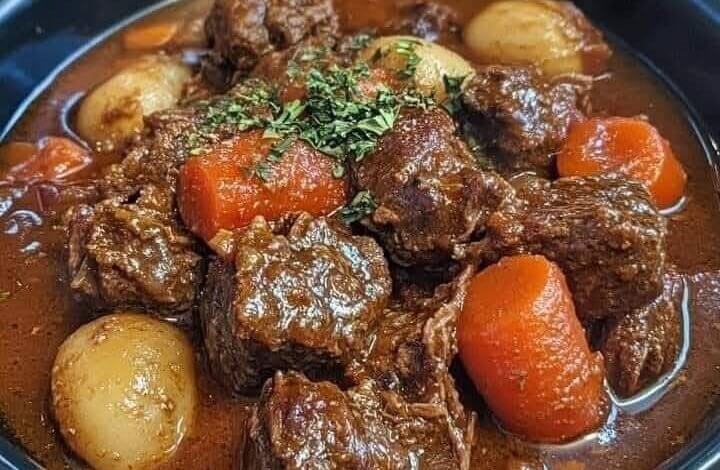
Beef Stew Recipe
Introduction: Beef stew is the quintessential comfort food, offering a hearty, flavorful meal that can warm you up on the coldest of days. A rich combination of tender beef, hearty vegetables, and aromatic seasonings simmered together in a flavorful broth, beef stew is perfect for family dinners, meal prepping, or impressing guests at a gathering. It’s a timeless dish, full of deep, savory flavors that have evolved across cultures. In this recipe, we’re creating a tender, melt-in-your-mouth beef stew that will satisfy everyone at the table. The slow-cooked beef becomes so tender it practically falls apart, and the vegetables absorb all the rich, aromatic broth, making every bite a delight.
Ingredients:
- For the Stew:
- 2 lbs beef chuck, cut into 1-inch cubes (or stew beef)
- 2 tablespoons olive oil (for searing)
- 1 large onion, chopped
- 2 cloves garlic, minced
- 4 medium carrots, peeled and cut into chunks
- 3 medium potatoes, peeled and cut into chunks
- 2 celery stalks, chopped
- 1 cup frozen peas (optional, added at the end)
- 6 cups beef broth (low-sodium preferred)
- 2 cups red wine (optional, adds depth of flavor)
- 2 bay leaves
- 1 tablespoon fresh thyme (or 1 tsp dried thyme)
- 1 teaspoon dried rosemary
- 1 teaspoon paprika
- Salt and pepper to taste
- 1 tablespoon Worcestershire sauce
- 2 tablespoons tomato paste
- 3 tablespoons all-purpose flour (for thickening)
- For Garnish (optional):
- Fresh parsley, chopped
Instructions:
- Sear the Beef:
- Heat olive oil in a large pot or Dutch oven over medium-high heat. Season the beef cubes with salt and pepper. Working in batches, add the beef to the pot and sear it on all sides until browned (about 3-4 minutes per batch). Remove the beef and set it aside.
- Sauté the Vegetables:
- In the same pot, add a bit more oil if needed. Add the chopped onion and garlic, cooking for 3-4 minutes until softened and fragrant. Scrape the bottom of the pot to release any brown bits from the beef (this adds flavor to the stew).
- Stir in the tomato paste and cook for 1-2 minutes to deepen the flavor.
- Deglaze the Pot:
- Add the red wine (if using) to the pot, scraping the bottom to release any remaining bits. Let the wine simmer for 2-3 minutes to reduce slightly.
- Add the Broth and Seasonings:
- Return the seared beef to the pot. Add the beef broth, Worcestershire sauce, bay leaves, thyme, rosemary, paprika, carrots, potatoes, and celery. Stir everything to combine.
- Bring the stew to a simmer, then reduce the heat to low and cover. Let it simmer for 2-3 hours, or until the beef is tender and the vegetables are cooked through. Stir occasionally to make sure the stew doesn’t burn at the bottom.
- Thicken the Stew:
- In the last 30 minutes of cooking, combine the flour with a little bit of water (or some of the broth from the stew) to create a slurry. Stir this into the stew to thicken it.
- If using frozen peas, add them in the last 10 minutes of cooking.
- Serve:
- Once the stew is thickened and the beef is tender, taste and adjust the seasoning with more salt, pepper, or Worcestershire sauce if needed.
- Ladle the beef stew into bowls, garnish with fresh parsley, and serve with crusty bread or crackers for dipping.
Methods:
- Searing the Beef:
- Searing the beef first locks in its flavor, creating a rich foundation for the stew. The caramelization that occurs during searing helps develop depth and a hearty taste, which infuses the broth as it cooks.
- Slow Simmering:
- Slow cooking allows the beef to break down and become melt-in-your-mouth tender. It also allows the flavors of the vegetables and spices to meld together, creating a rich and satisfying broth.
- Thickening with Flour:
- Adding a flour slurry at the end of cooking helps to thicken the stew, giving it a velvety texture. This creates a hearty, gravy-like consistency that makes the stew more filling and comforting.
- Deglazing:
- Deglazing the pot with wine or broth lifts any fond (caramelized bits) left from searing the meat, contributing additional flavor to the stew.
History of Beef Stew:
Beef stew is a dish with deep historical roots, often associated with the working class in Europe and the Americas. In the 19th century, stews were a popular way to stretch meat and vegetables into a hearty, filling meal. The method of slow-cooking tough cuts of beef, like chuck, helped to make them tender and flavorful. Over time, beef stew recipes evolved to incorporate regional ingredients and seasonings, but the basic principle of slow-cooking beef with vegetables in a flavorful broth has remained unchanged. From Ireland’s famous “beef and Guinness stew” to the American classic, beef stew has become a global comfort food.
Benefits of Beef Stew:
- High Protein Content: The beef in the stew provides a substantial amount of protein, essential for muscle repair, immune function, and overall health.
- Packed with Nutrients: The mix of vegetables (carrots, potatoes, celery, peas) provides a good balance of vitamins, minerals, and fiber, supporting digestive health and overall well-being.
- Comfort Food with Depth: The slow-cooked flavors provide emotional satisfaction, which is why stews are often considered comfort food. The warm, rich broth is perfect for cozy nights or feeding a crowd.
- Customizable: You can easily adapt the recipe by adding other vegetables or seasoning to your taste, making it flexible for different dietary preferences.
Formation and Presentation:
Beef stew is traditionally served in a rustic, hearty manner, often in deep bowls or even in bread bowls for added texture. It is commonly paired with crusty bread to soak up the flavorful broth. The dish should have a thick, rich consistency with tender pieces of beef and well-cooked vegetables. The bright green of the peas and the freshness of the parsley garnish add a nice contrast to the deep, rich color of the stew. It is typically served as a main dish, often accompanied by a side salad or roasted vegetables.
Nutritional Information (per serving, 1/6th of the recipe):
- Calories: 350-400 kcal
- Protein: 30g
- Fat: 18g
- Carbohydrates: 30g
- Fiber: 5g
- Sugars: 6g
- Sodium: 600-700mg
(Note: These values are approximate and may vary depending on the exact ingredients used.)
Conclusion:
Beef stew is more than just a meal; it’s a warm embrace on a cold day, a comfort food that never fails to satisfy. The combination of tender beef, hearty vegetables, and a rich, flavorful broth makes for a fulfilling dish that is both nutritious and delicious. Whether you’re cooking for a family dinner or looking for a meal prep option, beef stew is versatile, easy to make, and sure to please everyone at the table. It’s the perfect dish for slow-cooking, allowing the flavors to develop fully and deliver a deeply satisfying result.
Lovers of the Recipe:
Beef stew will delight anyone who enjoys rich, flavorful meals that provide comfort and nourishment. It’s perfect for meat lovers, those who enjoy hearty, slow-cooked dishes, or anyone who appreciates the warmth and depth of a classic comfort food. Whether you’re a busy cook looking for an easy dinner, or someone who loves to create traditional meals from scratch, this recipe will find a place in your heart (and on your table).
For Ads in WordPress:
If you want to insert an ad space in your WordPress post, here’s how you can do it:
- Go to your WordPress editor (where you’re writing your post).
- Use a block element for advertisements or an ad plugin (like Google AdSense).
- Insert the ad code where you’d like it to appear (you can add it before or after the recipe, between sections, or in the sidebar).
- You can also use banner ads, image ads, or text ads by placing them in custom HTML blocks in your post.
Introduction: Beef stew is the quintessential comfort food, offering a hearty, flavorful meal that can warm you up on the coldest of days. A rich combination of tender beef, hearty vegetables, and aromatic seasonings simmered together in a flavorful broth, beef stew is perfect for family dinners, meal prepping, or impressing guests at a gathering. It’s a timeless dish, full of deep, savory flavors that have evolved across cultures. In this recipe, we’re creating a tender, melt-in-your-mouth beef stew that will satisfy everyone at the table. The slow-cooked beef becomes so tender it practically falls apart, and the vegetables absorb all the rich, aromatic broth, making every bite a delight.
Ingredients:
- For the Stew:
- 2 lbs beef chuck, cut into 1-inch cubes (or stew beef)
- 2 tablespoons olive oil (for searing)
- 1 large onion, chopped
- 2 cloves garlic, minced
- 4 medium carrots, peeled and cut into chunks
- 3 medium potatoes, peeled and cut into chunks
- 2 celery stalks, chopped
- 1 cup frozen peas (optional, added at the end)
- 6 cups beef broth (low-sodium preferred)
- 2 cups red wine (optional, adds depth of flavor)
- 2 bay leaves
- 1 tablespoon fresh thyme (or 1 tsp dried thyme)
- 1 teaspoon dried rosemary
- 1 teaspoon paprika
- Salt and pepper to taste
- 1 tablespoon Worcestershire sauce
- 2 tablespoons tomato paste
- 3 tablespoons all-purpose flour (for thickening)
- For Garnish (optional):
- Fresh parsley, chopped
Instructions:
- Sear the Beef:
- Heat olive oil in a large pot or Dutch oven over medium-high heat. Season the beef cubes with salt and pepper. Working in batches, add the beef to the pot and sear it on all sides until browned (about 3-4 minutes per batch). Remove the beef and set it aside.
- Sauté the Vegetables:
- In the same pot, add a bit more oil if needed. Add the chopped onion and garlic, cooking for 3-4 minutes until softened and fragrant. Scrape the bottom of the pot to release any brown bits from the beef (this adds flavor to the stew).
- Stir in the tomato paste and cook for 1-2 minutes to deepen the flavor.
- Deglaze the Pot:
- Add the red wine (if using) to the pot, scraping the bottom to release any remaining bits. Let the wine simmer for 2-3 minutes to reduce slightly.
- Add the Broth and Seasonings:
- Return the seared beef to the pot. Add the beef broth, Worcestershire sauce, bay leaves, thyme, rosemary, paprika, carrots, potatoes, and celery. Stir everything to combine.
- Bring the stew to a simmer, then reduce the heat to low and cover. Let it simmer for 2-3 hours, or until the beef is tender and the vegetables are cooked through. Stir occasionally to make sure the stew doesn’t burn at the bottom.
- Thicken the Stew:
- In the last 30 minutes of cooking, combine the flour with a little bit of water (or some of the broth from the stew) to create a slurry. Stir this into the stew to thicken it.
- If using frozen peas, add them in the last 10 minutes of cooking.
- Serve:
- Once the stew is thickened and the beef is tender, taste and adjust the seasoning with more salt, pepper, or Worcestershire sauce if needed.
- Ladle the beef stew into bowls, garnish with fresh parsley, and serve with crusty bread or crackers for dipping.
Methods:
- Searing the Beef:
- Searing the beef first locks in its flavor, creating a rich foundation for the stew. The caramelization that occurs during searing helps develop depth and a hearty taste, which infuses the broth as it cooks.
- Slow Simmering:
- Slow cooking allows the beef to break down and become melt-in-your-mouth tender. It also allows the flavors of the vegetables and spices to meld together, creating a rich and satisfying broth.
- Thickening with Flour:
- Adding a flour slurry at the end of cooking helps to thicken the stew, giving it a velvety texture. This creates a hearty, gravy-like consistency that makes the stew more filling and comforting.
- Deglazing:
- Deglazing the pot with wine or broth lifts any fond (caramelized bits) left from searing the meat, contributing additional flavor to the stew.
History of Beef Stew:
Beef stew is a dish with deep historical roots, often associated with the working class in Europe and the Americas. In the 19th century, stews were a popular way to stretch meat and vegetables into a hearty, filling meal. The method of slow-cooking tough cuts of beef, like chuck, helped to make them tender and flavorful. Over time, beef stew recipes evolved to incorporate regional ingredients and seasonings, but the basic principle of slow-cooking beef with vegetables in a flavorful broth has remained unchanged. From Ireland’s famous “beef and Guinness stew” to the American classic, beef stew has become a global comfort food.
Benefits of Beef Stew:
- High Protein Content: The beef in the stew provides a substantial amount of protein, essential for muscle repair, immune function, and overall health.
- Packed with Nutrients: The mix of vegetables (carrots, potatoes, celery, peas) provides a good balance of vitamins, minerals, and fiber, supporting digestive health and overall well-being.
- Comfort Food with Depth: The slow-cooked flavors provide emotional satisfaction, which is why stews are often considered comfort food. The warm, rich broth is perfect for cozy nights or feeding a crowd.
- Customizable: You can easily adapt the recipe by adding other vegetables or seasoning to your taste, making it flexible for different dietary preferences.
Formation and Presentation:
Beef stew is traditionally served in a rustic, hearty manner, often in deep bowls or even in bread bowls for added texture. It is commonly paired with crusty bread to soak up the flavorful broth. The dish should have a thick, rich consistency with tender pieces of beef and well-cooked vegetables. The bright green of the peas and the freshness of the parsley garnish add a nice contrast to the deep, rich color of the stew. It is typically served as a main dish, often accompanied by a side salad or roasted vegetables.
Nutritional Information (per serving, 1/6th of the recipe):
- Calories: 350-400 kcal
- Protein: 30g
- Fat: 18g
- Carbohydrates: 30g
- Fiber: 5g
- Sugars: 6g
- Sodium: 600-700mg
(Note: These values are approximate and may vary depending on the exact ingredients used.)
Conclusion:
Beef stew is more than just a meal; it’s a warm embrace on a cold day, a comfort food that never fails to satisfy. The combination of tender beef, hearty vegetables, and a rich, flavorful broth makes for a fulfilling dish that is both nutritious and delicious. Whether you’re cooking for a family dinner or looking for a meal prep option, beef stew is versatile, easy to make, and sure to please everyone at the table. It’s the perfect dish for slow-cooking, allowing the flavors to develop fully and deliver a deeply satisfying result.
Lovers of the Recipe:
Beef stew will delight anyone who enjoys rich, flavorful meals that provide comfort and nourishment. It’s perfect for meat lovers, those who enjoy hearty, slow-cooked dishes, or anyone who appreciates the warmth and depth of a classic comfort food. Whether you’re a busy cook looking for an easy dinner, or someone who loves to create traditional meals from scratch, this recipe will find a place in your heart (and on your table).
For Ads in WordPress:
If you want to insert an ad space in your WordPress post, here’s how you can do it:
- Go to your WordPress editor (where you’re writing your post).
- Use a block element for advertisements or an ad plugin (like Google AdSense).
- Insert the ad code where you’d like it to appear (you can add it before or after the recipe, between sections, or in the sidebar).
- You can also use banner ads, image ads, or text ads by placing them in custom HTML blocks in your post.